
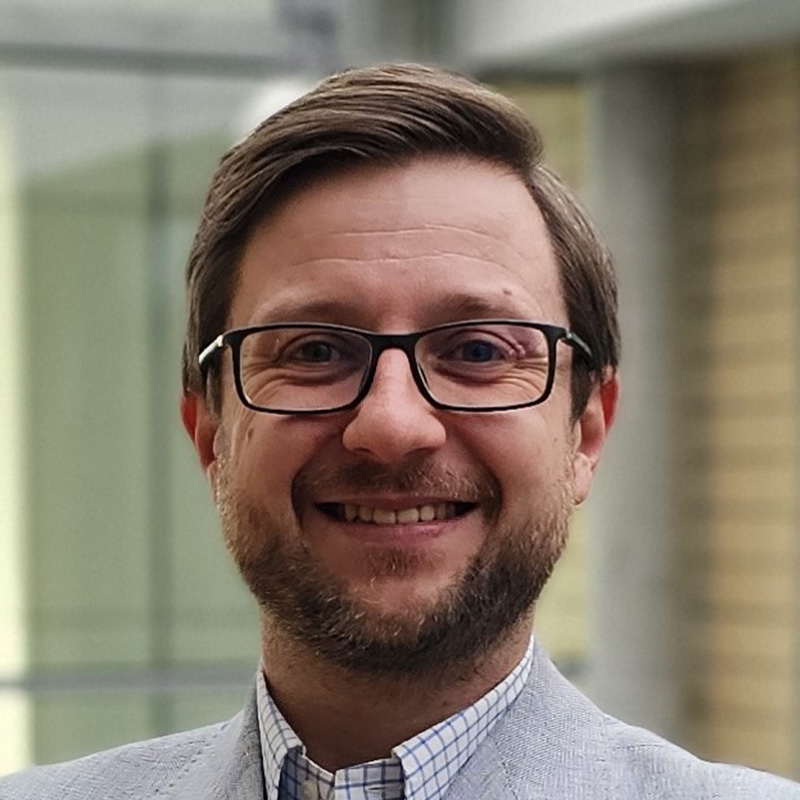
Jakub Zdarta, PhD, Eng., Prof. PUT – Graduated of the Faculty of Chemistry at A. Mickiewicz University in Poznań (2010) and the Faculty of Chemical Technology at the Poznan University of Technology (2013). He obtained a doctoral degree in 2017 in chemical sciences in the field of chemical technology and become an associate professor in 2021. In 2017-2018 and 2021 he completed a postdoc internship at DTU Chemical Engineering, Technical University of Denmark, and in 2019 he did an internship at School of Civil and Environmental Engineering, University of Technology Sydney. From 2018 he works in Institute of Chemical Technology and Engineering at Faculty of Chemical Technology, Poznan University of Technology. Author of over 140 scientific publications indexed by Thomson Reuters JCR and over 20 chapters in monographs. Principal or general investigator in a numerous of research projects financed by the National Science Center, NAWA and the Ministry of Science and Higher Education. Laureate of Minister’s scholarship for outstanding young scientists, reviewer in numerous of scientific Journals as well as Guest Editor in several Special Issues of scientific Journals. The area of his research is focused on biotechnology, biocatalysis, enzyme immobilization, biological wastewater treatment, bioremediation, removal of emerging organic contaminants, membrane processes, membrane bioreactors, biomass pretreatment and conversion, hybrid materials and biomaterials.
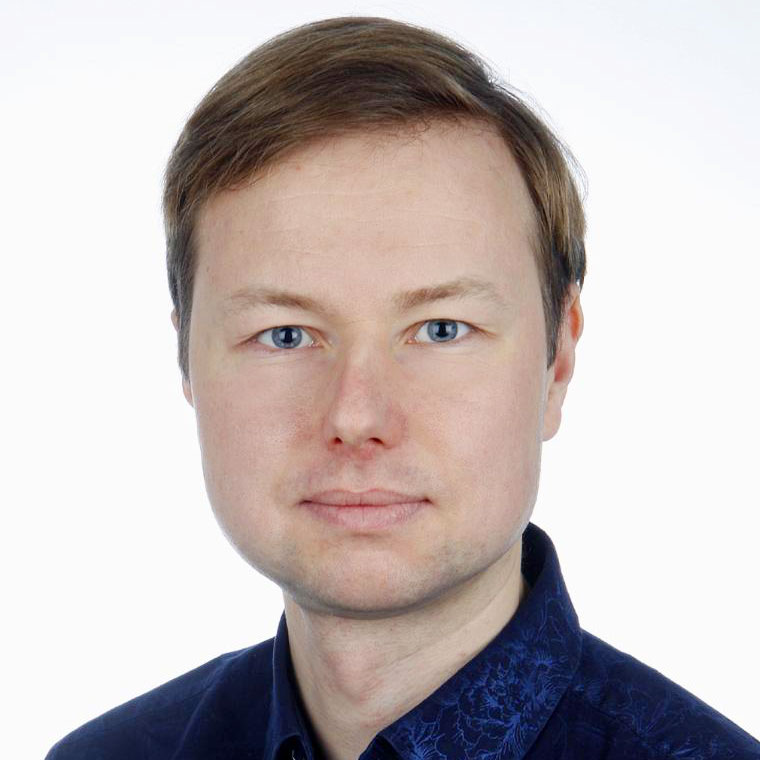
Wojciech Smułek, PhD, Eng. –is a prominent researcher and Associate Professor at the Poznań University of Technology, associated with the Faculty of Chemical Technology. He defended his PhD thesis in 2017. His academic area is at the intersection of applied microbiology, environmental biotechnology, and colloid chemistry. His career is marked by international collaboration, including a post-doc research fellowship at the University of Copenhagen in 2022 supported by the NAWA program. Moreover, he cooperate with University of Aveiro and Slovak Academy of Science. Beyond his research, he is an active member of the Polish Society of Microbiologists and Polish Society of Chemistry.
Mateusz Łężyk, PhD, Eng. – Mateusz Łężyk received his Ph.D. at the Department of Chemical and Biochemical Engineering at Technical University of Denmark in 2014. He worked on metagenomic mining of enzyme diversity for various industrially-relevant processes. From 2015 to 2018 was a postdoc researcher at Center for BioProcess Engineering at DTU Chemical Engineering. He is currently an Assistant Professor at the Faculty of Civil and Environmental Engineering, Poznan University of Technology, and leads the Microbial Conversions and Bioengineering (MiConBio) research group. The group develops and applies integrated molecular and bioprocess strategies to understand, design, and steer microbial systems for sustainable production. MiConBio’s research centers on two complementary directions: (1) molecular characterization, optimization, and control of mixed microbial consortia for the fermentative conversion of waste streams—particularly C1 gaseous substrates—into valuable products; and (2) discovery and engineering of microbes and enzymes for the biosynthesis of value-added chemicals and energy carriers. By combining multi-omics, synthetic biology, and bioprocess development, the group aims to accelerate the translation of microbial innovations into robust, scalable technologies supporting circular bioeconomy solutions.
Agnieszka Rybarczyk, MSc, Eng. – PhD student at the Faculty of Chemical Technology, Poznan University of Technology. She holds a degree in the interdisciplinary field of Pharmaceutical Engineering. Her research focuses on pharmaceuticals and the environmental threats associated with their entry into natural ecosystems. She is particularly interested in the development of biocatalytic systems for the degradation of wastewater contaminants. She participates in scientific conferences and actively engages in research projects, which has resulted in the co-authorship of multiple peer-reviewed publications.
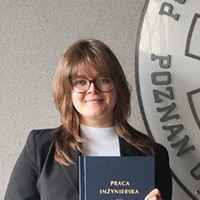
Malwina Nowak, MSc, Eng. – Graduate of the Bachelor’s and Master’s programs in Chemical and Process Engineering, currently pursuing a PhD at the Faculty of Chemical Technology at Poznan University of Technology. Her research interests focus on interdisciplinary topics at the intersection of chemical engineering, biocatalysis, and enzymatic technologies, with particular emphasis on the design of sustainable synthesis processes using multienzyme systems. Her scientific work also encompasses modern approaches to process intensification and environmentally friendly chemical technologies. Outside of academia, she dedicates a considerable amount of her free time to reading. She is interested in Asian culture, particularly Thailand, as well as K-pop music.
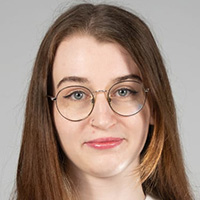
Graduate of engineering studies and a master’s student in Chemical Technology at Poznan University of Technology. Her scientific interests focus on organic chemistry and biochemistry, with particular emphasis on the application of enzymes and functional materials in the analysis and synthesis of compounds of environmental and pharmaceutical importance.
As part of her research projects, she conducted studies on the immobilization of enzymes on bioactive membranes used in the analysis of environmental pollutants, including microplastics. Subsequently, she participated in research involving the surface modification of silica supports in order to obtain stable and efficient biocatalytic systems. Her work included the immobilization of enzymes on modified materials as well as the evaluation of the activity, stability, and application potential of the obtained systems in the synthesis of pharmaceutically active compounds.
She is actively involved in two chemistry student scientific associations, developing skills in experimental design, laboratory work, and data analysis. In the future, she plans to pursue a PhD and continue developing her scientific career.